
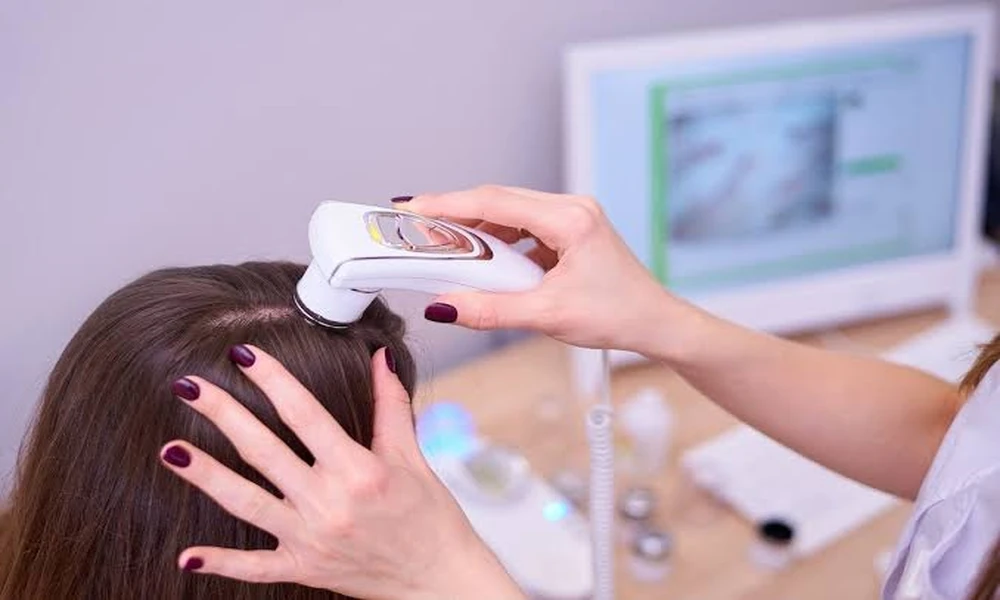
Before booking red light therapy, identify the specific concern you want a professional to assess. A skin-texture goal, an acne concern and hair thinning are different reasons to seek advice. A useful consultation connects the proposed service with your circumstances and explains its limits before you commit to appointments.
One light label can sit over several different aims
Beauty advertisements often place several appealing outcomes close together. A reader may arrive interested in one concern and leave imagining that a single treatment addresses everything. Slow the decision down by naming the result that matters most to you. That creates a more focused discussion than asking whether red light works in general.
The American Academy of Dermatology’s red-light guidance explains that evidence and suitability differ across concerns and devices. Research about one use should not be treated as proof for every skin or hair issue. A qualified clinician can help establish whether a proposed treatment belongs in your individual plan.
Keep cosmetic preferences separate from symptoms that need assessment. Wanting skin to look different is not the same question as asking why a new patch, persistent irritation or unexpected hair loss has appeared. Do not use a beauty booking to diagnose a condition yourself. Describe the concern honestly and seek the appropriate medical evaluation where needed.
A simple statement can be enough: you want to discuss a particular change in appearance, or understand whether a service is relevant after professional assessment. You do not need to know the device terminology before the consultation. The provider’s explanation should make that terminology useful rather than make you feel obliged to adopt it.
Bring the concern into the consultation
Explain what you have noticed, when it became relevant and what you have already tried. Keep the account factual. If you are unsure whether two events are connected, say so rather than offering a self-diagnosis. A concise description gives the professional a clearer starting point than a long list of conclusions gathered from social media.
Discuss current skincare, treatments and medications with the appropriate clinician or provider as requested. Do not stop prescribed care to fit an appointment or assume that a non-invasive service needs no suitability review. Ask how any relevant health information should be shared and which questions require advice from your doctor or dermatologist.
If you bring photographs, use them to show the concern rather than to demand another person’s outcome. Images can differ in lighting, styling and editing, and a stranger’s situation may not resemble yours. Explain what attracts you to the reference, such as a particular aspect of skin appearance, without treating the photograph as a promised result.
Ask what would make the provider recommend postponing, changing or declining the service. A clear explanation of suitability is part of a useful consultation. It helps you understand the boundaries of the offer and whether another type of assessment should happen first. The conversation should leave room for a different next step.
Read the service description at treatment level
A standalone LED appointment and a facial that includes LED can involve different components. Ask what the actual booking contains, which part addresses the concern discussed and what preparation or aftercare applies. Do not assume that every service carrying the same light-therapy label is identical.
In Mississauga, Truly You’s holistic beauty services list Celluma LED appointments and a facial incorporating LED. That gives prospective clients specific service descriptions to discuss. Confirm the current offering and individual suitability directly, particularly if your interest involves a medical skin concern or hair loss rather than a general beauty appointment.
Request the name of the device and an explanation of its intended use in the proposed service. Technical details should answer a practical question: why this option is being considered for the concern you described. A long specification list is not a substitute for that explanation, and a familiar device name does not establish a personal outcome.
Clarify the expected appointment commitment before comparing prices. Ask what is included in the quoted service, whether a series is being proposed and how the recommendation will be reviewed. Do not assume a package size proves the number of sessions you need. The schedule should follow an assessed plan, with its uncertainty explained.
Also ask about the practical experience. How will you communicate discomfort, what instructions will you receive and whom should you contact afterward with a concern? The provider should explain the procedure-specific precautions. Avoid improvising additional exposure or combining treatments based on an online routine created for a different device or person.
Agree on how the decision will be reviewed
Before committing to a series, discuss what the professional expects to evaluate and when. That may involve a planned review of the original concern and your experience with the service. Ask what would lead to reassessment rather than automatically purchasing another package. A review point makes the plan easier to understand even when the outcome cannot be guaranteed.
Keep the goal modestly defined. If the concern is appearance, agree on a useful way to discuss it without turning every daily mirror check into a measurement. If it involves a diagnosed condition, follow the medical professional’s assessment approach. The appropriate method depends on the purpose of the treatment.
Consider the time and expense alongside other options explained during consultation. A service can be available without being the most suitable choice for your priorities. You should be able to state what is being tried, why it is relevant and what remains uncertain. That understanding is a better basis for consent than a collection of broad benefits.
Write one question about the change you want to discuss before booking. Bringing that question into the room helps the consultation stay connected to your actual concern, even when the treatment menu offers many possibilities.

Comments are closed.