
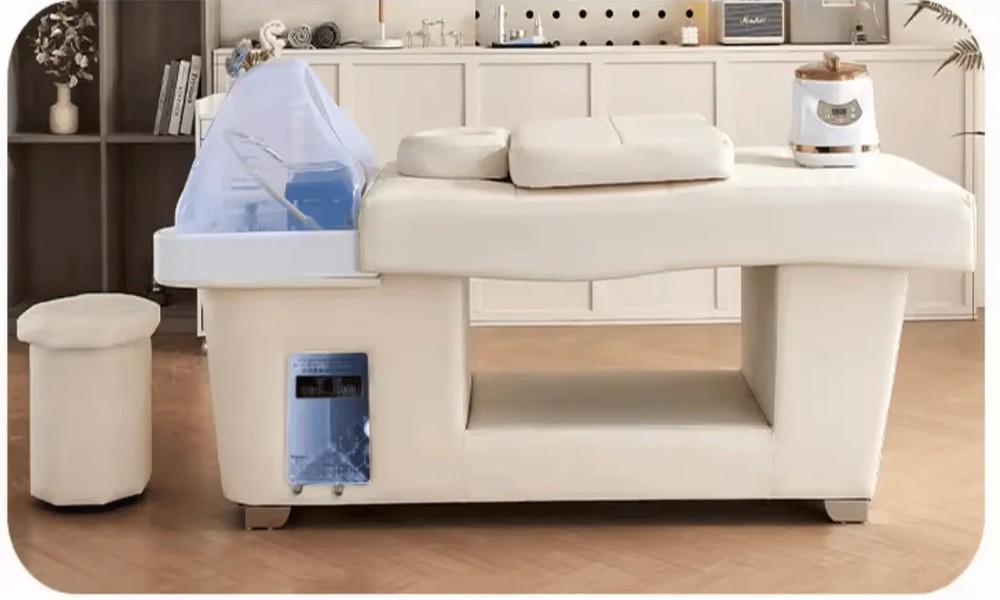
The Japanese head spa treatment has moved from a niche curiosity to one of the most searched-for beauty services in the UK. Searches for head spa treatments have risen sharply over the past couple of years, driven by social media exposure and a growing mainstream appetite for wellness treatments that address both the physical condition of the scalp and the mental relief of genuine therapeutic relaxation. For salon owners who are adding this treatment to their menu, or building a dedicated head spa studio from the ground up, the chair is not a supporting piece of equipment. It is the centre of the entire experience, and head spa chairs deserve considerably more attention in the planning process than many operators give them.
Why the Chair Is Not Interchangeable with a Standard Backwash Unit
A standard salon backwash unit is designed primarily for hair washing as a functional step in a cut or colour service. A head spa chair is designed for an extended treatment, typically 45 to 90 minutes, where the client’s comfort throughout the entire session is central to the therapeutic value of the experience. The difference in how these two types of equipment approach the client’s body position, neck support, and overall comfort over an extended period is significant.
The Japanese head spa technique involves extended scalp massage, acupressure, deep cleansing, and a range of manipulations that require the therapist to work around a client who is completely relaxed and in a sustained reclined position. A client who shifts position repeatedly because the chair is not adequately supporting their neck, lower back, or legs is not experiencing the full therapeutic benefit of the treatment. The chair is not background furniture. It is the foundation of the client experience.
What Separates a Good Head Spa Chair from an Adequate One
The key functional requirements for a head spa chair are specific and worth understanding before you purchase. Neck support that accommodates a range of client heights without requiring adjustment during the treatment. A recline mechanism that allows the therapist to position the client correctly for different stages of the treatment without disturbing their relaxation. Adequate cushioning and upholstery quality for the sustained contact of a long treatment. A basin design that allows water to drain effectively without pooling and that positions the client’s head correctly relative to the therapist’s working position.
Heating functions built into the seat and footrest, a feature common in Japanese-specification head spa chairs, contribute to the overall sense of warmth and relaxation that makes the treatment genuinely different from a standard salon service. This is not a luxury addition. In a treatment where relaxation is the primary therapeutic mechanism, it is a functional component.
The Investment Case for Salon Owners
The Japanese head spa tops current UK spa trend rankings, and the treatment commands a price point that reflects its premium positioning. Sessions typically run from £60 to £120 or more depending on duration and location, with high urban demand and consistent rebooking rates among clients who experience it for the first time. For a salon with the right equipment and trained therapists, the revenue per treatment hour compares very favourably with most other services on the menu.
The chair is the single largest capital investment in setting up a head spa service, and it is the component that most directly determines the quality of the client experience. Buying on price and discovering that the chair does not support the quality of treatment you want to deliver is a costly mistake to make at the start of a new service offering.
The Authenticity Point
Clients who have discovered Japanese head spa through social media or through a genuine Japanese head spa experience are increasingly sophisticated about what the treatment should feel like. The equipment, the technique, and the overall sensory environment all contribute to a sense of authenticity that commands premium pricing and generates the word-of-mouth and social sharing that drives ongoing bookings. A chair that looks attractive in the studio but does not deliver the right client experience undermines that authenticity at the most fundamental level.
The Closing Thought
The Japanese head spa is not a passing trend. It is a treatment that addresses a genuine and growing demand for wellness experiences that combine physical benefit with deep relaxation. Building it properly, with the right chair at the centre of the experience, is the difference between a service that delivers on its promise and one that approximates it. In a treatment category where the experience is everything, that distinction matters.

Comments are closed.